
Insight
The Cottage Is Having a Moment: Why Warm, Characterful Homes Are Replacing All-White Everything
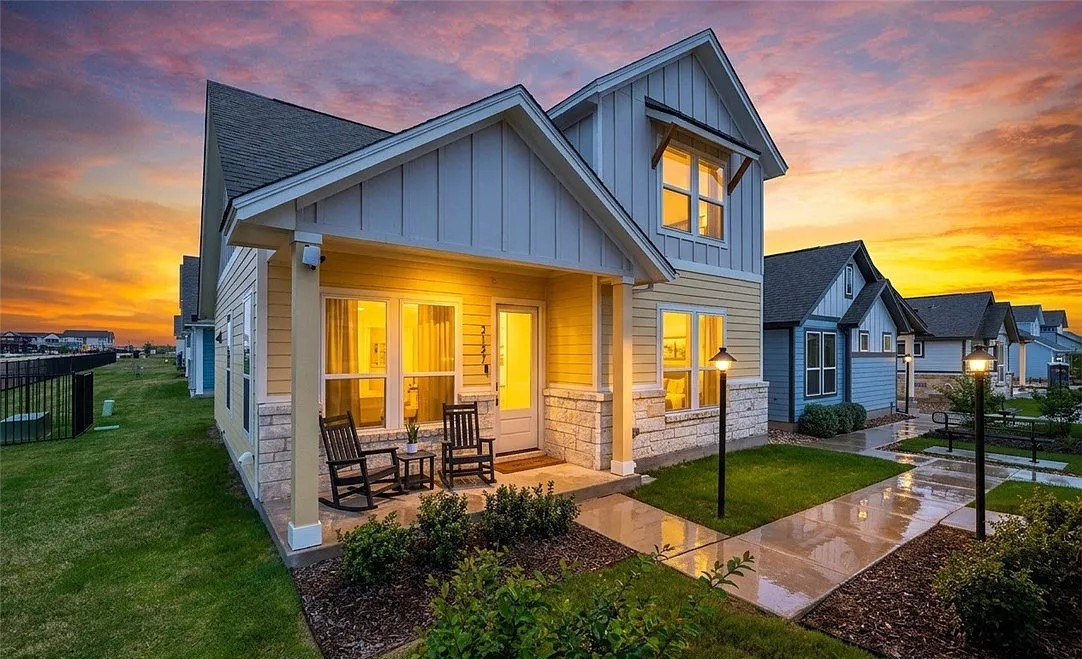
Cottage style homes are having a genuine moment, and the shift behind it is easy to miss if you only read the headlines. This is not a rejection of the look that dominated the last decade. It is that look growing up.
For years, one aesthetic ran the table: white exterior, black windows, gray interior, high contrast throughout. It was clean, it photographed beautifully, and it worked. Then it appeared everywhere at once, and somewhere along the way a lot of people started noticing that their houses felt more like a set than a home.
Warm is replacing cold
The most useful way to understand why cottage style homes are resurfacing in 2026 is not white versus color. It is warm versus cold.
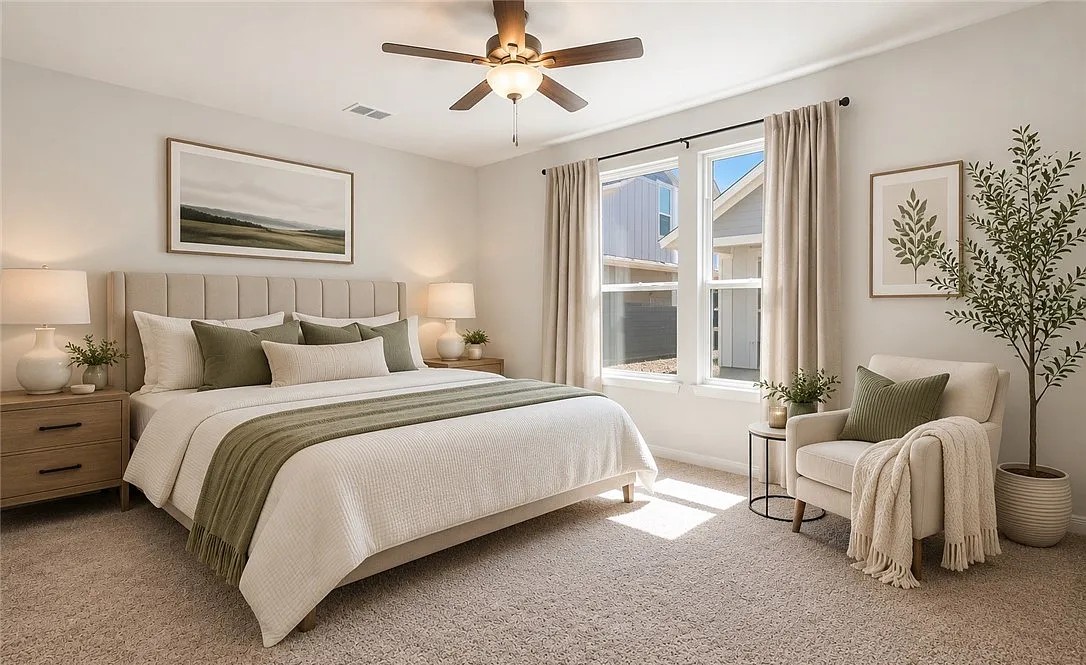
Bright white kitchens defined the farmhouse era: white cabinets, white subway tile, white counters. In 2026 that palette is shifting toward creamy off-whites, soft taupes, earthy greiges, muted olive greens, and warm mushroom tones, in a broader move away from cold minimalism.
Designers describe the same pivot in their own work. Asked what clients are gravitating toward this year, they point consistently to nature-inspired warm neutrals: wheat, caramel, terracotta, and warm grays with taupe and greige undertones, described plainly as not the cool grays of the past decade.
Notice what is not on that list. Nobody is saying get rid of white. They are saying stop using the cold version of it. A warm white on a wood-toned floor reads completely differently than a stark white against cool gray, even though both are technically white.
That distinction matters, because the internet’s version of this trend has become “throw out everything you own,” and that is neither realistic nor what designers are actually recommending. The shift is toward palettes that sit within the same family and let a room feel settled rather than staged.
Modern farmhouse didn't die; it warmed up
It is worth saying plainly, because the takes have gotten loud. Modern farmhouse is not over. What changed is the finish.
The stark whites and cool grays that once defined the look have made room for cozy creams, natural wood tones, earthy colors and textures that feel collected over time. Builders are seeing the same thing from the supply side; cool blue-toned grays are being replaced in new construction by warmer greiges with brown, taupe, or mushroom undertones, on the straightforward logic that they feel less sterile and appeal to more buyers.
So cottage style homes are not the opposite of the farmhouse. They are where the farmhouse went.
The market is paying more for cottage style homes
This is not only a matter of taste. Zillow’s 2026 analysis of listing language found that the word “cottage” alone is associated with a 3.2 percent sale price premium, and that turnkey homes sell for about 2.9 percent more than expected while fixer-uppers sell for roughly 14 percent less. Listings highlighting custom features carried a 3.2 percent premium, with bespoke finishes close behind.
Two things worth pulling out of that.
The first is that character now has a measurable value, after a long stretch where the safe advice was to keep everything neutral for resale. Cottage style homes benefit directly from that shift. The second is the gap between turnkey and fixer-upper, which is enormous. Buyers do not want a project. With affordability tight, most would rather have the work already done than take it on after closing.
What cottage style homes get right
Strip away the styling and cottage style homes come down to a set of architectural moves, most of them old:
- A porch you can actually sit on.Not a decorative entry. Deep enough for two chairs and a small table, oriented so you can see people go by.
- Modest scale, handled well.Cottages are not large. They earn their comfort through ceiling height, window placement, and rooms that do one thing properly rather than sprawling.
- Roof lines with some shape to them.Gables, dormers, a bit of pitch. The silhouette is doing as much work as the paint.
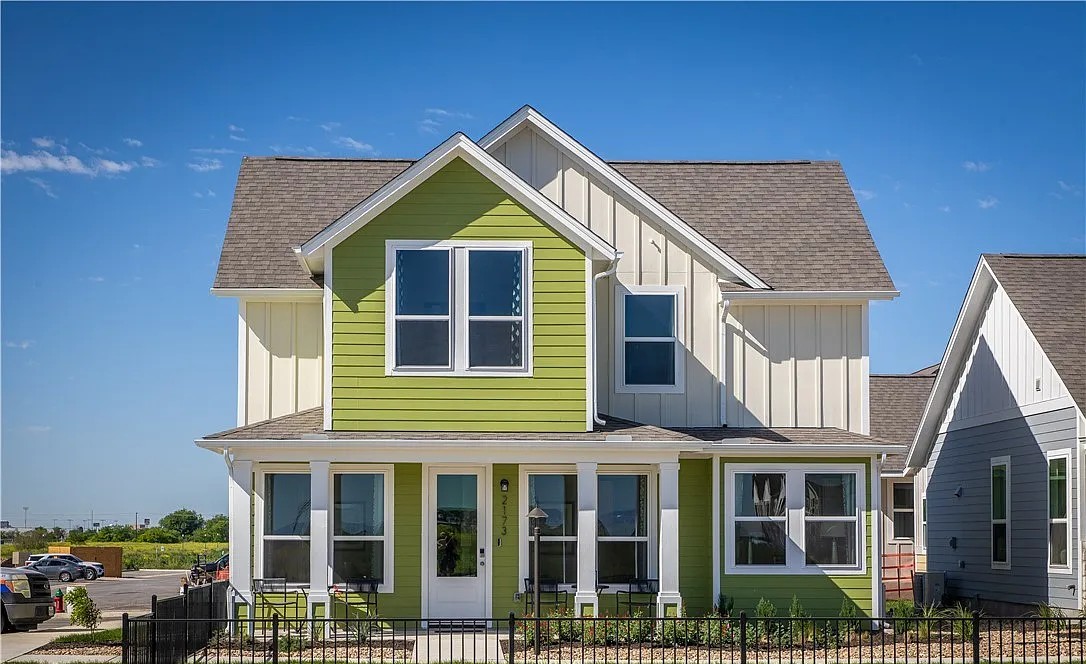
- Color, used without apology.Historic cottage neighborhoods were painted. Butter yellow, sage, deep blue, cream with a bright front door. A street where every house is a different color is not a novelty; it is the older tradition, and the beige-on-beige subdivision is the recent invention.
- Natural material at the base.Stone or brick grounding painted siding gives a house visual weight and keeps color from reading as flimsy.
- A garden building.This one has quietly come back. Detached studios, garden rooms, and outbuildings have a long history in cottage design, and they are useful again for obvious reasons: a separate small structure a few steps from the back door is a genuinely different kind of space from a corner of the living room.
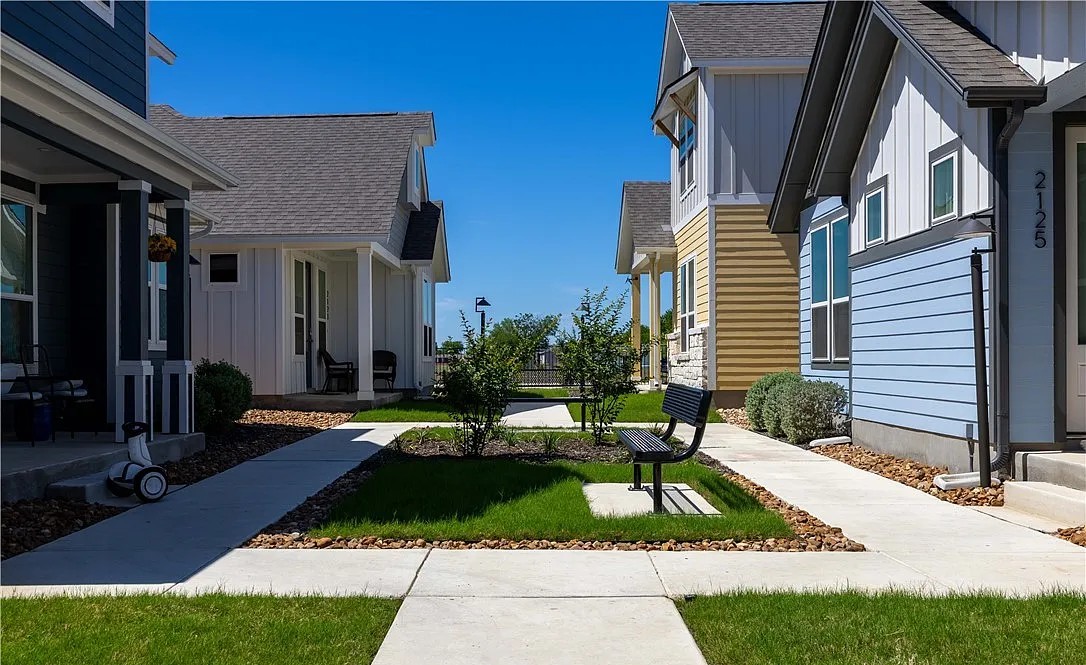
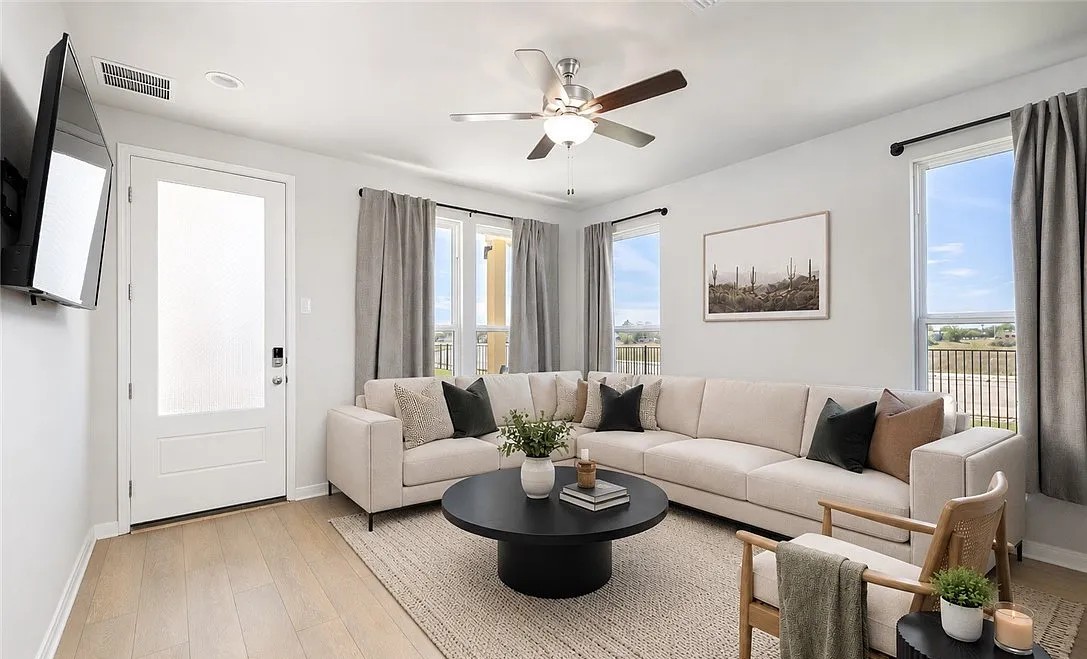
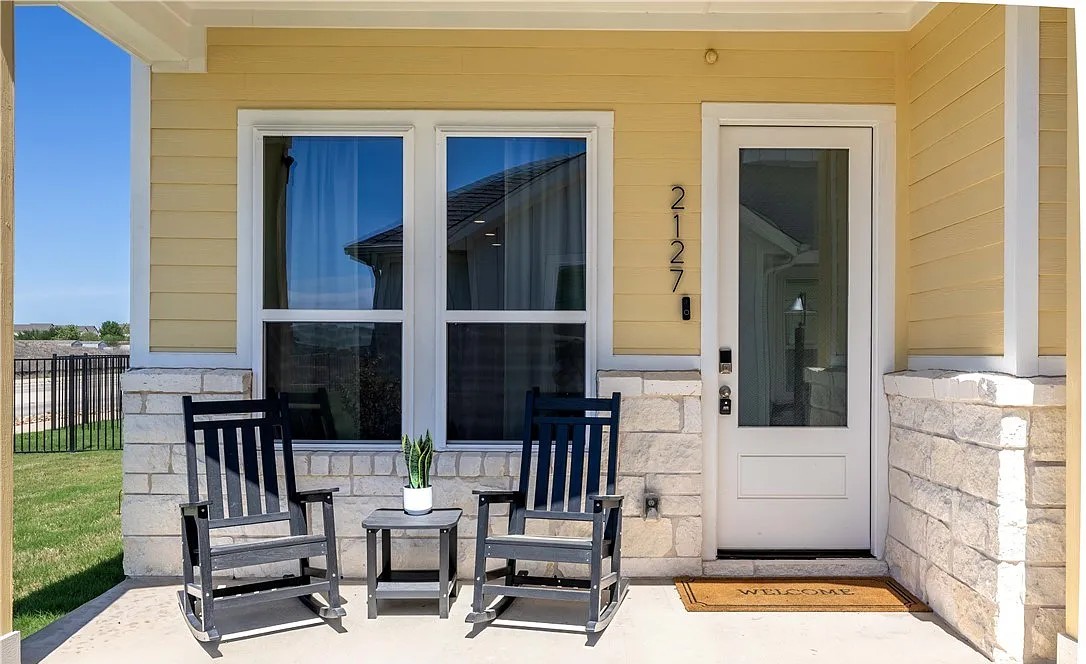
Cottage style homes have deep roots in New Braunfels
There is a nice coincidence in all of this for anyone shopping for cottage style homes in Central Texas, and for anyone moving to Texas who has not yet settled on a town.
The cottage vernacular now being rediscovered by design media is not imported. New Braunfels was settled by German immigrants in 1845, and the small painted houses with deep porches and steep roofs that fill its older neighborhoods are the local building tradition, not a trend borrowed from a mood board. The design world spent 2026 asking for homes that feel collected, storied, and warm. This town has been building them for a hundred and eighty years.
It is part of why our Garten Haus cottages in the Creekside area look the way they do: painted exteriors in yellows, greens and blues with white trim, limestone bases, gabled roofs, covered porches, and homes arranged to face one another across landscaped courtyards rather than turning their backs on the street. The little detached outbuildings behind them belong to the same tradition, and they have turned out to be one of the details people notice first.
Turnkey is the other half of the story
The last piece connects back to that fourteen percent gap.
The interiors that make cottage style homes work are harder to pull off than they look. The rooms that inspire people online are the product of a lot of decisions: textiles that work together, wood tones that agree, a palette that stays consistent from room to room. Most people know what they want and do not have the time or the eye to assemble it.
Which is why furnished and turnkey options have become as much a design story as a convenience one. When a home comes with a coordinated package already in place, you are not just skipping the shopping. You are getting the layered warmth that makes these spaces work, without a year of trial and error and a garage full of returns.
For a second home or an investment property, the case is even simpler. A furnished home is ready the day you get the keys.
Cottage style homes, in short
The white box is not banned and your kitchen is not out of date. The direction is warmer, softer, more characterful, and more personal, and cottage style homes are the form that captures it most naturally. It also happens to be one of the oldest and most sensible ways to build a small home, which is probably why it keeps coming back.
Curious what a cottage actually feels like to live in?
Garten Haus is a small community of painted cottages in the Creekside area of New Braunfels, built around courtyards instead of driveways.